
The rapid changes and taking place in contemporary societies deeply affect various domains, ranging from governance and science to the economy and technology. Information and communication technologies have also been significantly influenced by this transformation, and particularly in recent years, rapid advancements in this field have led to the widespread use of the internet. With advances in internet technologies, social media has become an indispensable part of modern society (Jia, 2024: 27). As the internet permeates nearly every aspect of daily life, social media platforms have likewise emerged as integral components of everyday routines (Erol, 2022).
The proliferation of social media has profoundly influenced all dimensions of family life-while offering unprecedented opportunities, it has also posed significant challenges to traditional family structures and modes of interaction. The impact of social media on the family is a complex process: on the one hand, it reduces geographical barriers, enabling family members to strengthen their ties; on the other, it decreases the frequency of face-to-face interactions, thereby clearly reshaping the modes and prevalence of communication within modern families. In this context, a thorough examination of the evolving family structure in the age of social media holds both theoretical and practical significance (Jia, 2024: 27).
The family, as one of the fundamental building blocks of social structure, is a universal institution present in all cultures (Işık, 2023). Hence, changes within the broader social structure inevitably affect the institution of the family. Social change, in turn, is regarded as one of the most complex and multifaceted topics in the social sciences. Broadly defined, social change refers to the processes of transformation, differentiation, or reshaping in the structure of society, its institutions, and its social relationships (Akbaş & Dursun, 2020).
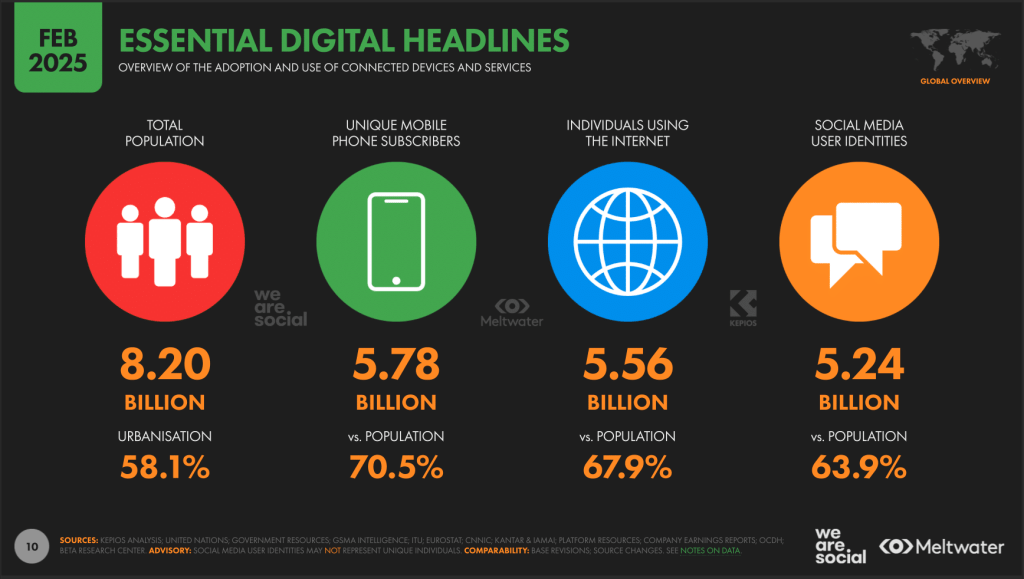
The a defining characteristic of the 21st century is the penetration of digitalization into all spheres of social life. Technological developments have transformed individuals’ modes of communication, their social relationships, and daily practices, with social media platforms becoming among the most influential tools of this transformation. The effects of digital interaction on interpersonal relationships have, over time, generated profound shifts in family structures, particularly laying the groundwork for new dynamics of conflict within marital relationships (Kaya, 2022). Thus, over the past two decades, the rise of digital media has not only reshaped many dimensions of daily life but has also brought about fundamental changes in couple and family relationships (Eichenberg et al., 2017: 249).
While traditional family structures were shaped within a framework emphasizing face-to-face communication and privacy, today couples increasingly experience problems such as increased jealousy, rising distrust, communication breakdown, and digital infidelity stemming from social media use (Gülnar & Öztat, 2020). These issues undermine marital bonds, contribute to rising divorce rates, and exert negative effects on children, extended family networks, and the broader social structure.
The rapid diffusion of digitalization has affected not only Turkish families but has also appeared similarly across different cultural contexts worldwide. A sociological study conducted in India examined the multifaceted influence of social media on family structures, highlighting the scope of this transformation. Social media has been found to significantly shape young people’s thought patterns, value systems, and familial roles, while simultaneously leading to reduced face-to-face interaction, increased intergenerational conflicts, and weakened family bonds. Increased time spent on social media encourages individuals to compare their lives with those of others, thereby fostering feelings of jealousy, inadequacy, and emotional disconnection. Moreover, the sense of freedom offered by social media has also influenced decisions concerning marriage and divorce, weakening traditional family values while prioritizing individual preferences. Thus, social media emerges as a factor threatening family ties and intra-family relationships.
The Transformation of Family Structure and the Institution of Marriage
Social structures are in a constant process of transformation throughout history, shaped by economic, cultural, and technological developments (Bayer, 2013). The family, as the most fundamental and significant social institution, has existed in every society across time. As the cornerstone of social structure, the family has undergone a profound transformation in recent years, particularly with the rapid expansion of social media platforms. This transformation has also affected the Turkish family structure, as in many other societies. Traditionally based on love, respect, tolerance, loyalty, and moral values, the Turkish family has been shaped around these principles from past to present. However, since the 2000s, with social media becoming central to daily life, visible changes have taken place within the family structure, and this process continues to intensify today (Erol, 2022). Within this transformation, the institution of marriage has also undergone a significant shift. Once considered the cornerstone of social order, economic solidarity, and cultural continuity, marriage today is increasingly perceived as a form of partnership centered on emotional satisfaction, individual happiness, and mutual understanding. This shift has led to changes in expectations from marriage, a decline in patience and tolerance, and the emergence of more fragile relationships.

Advancements in science and technology have accelerated the spread of digital devices such as computers, mobile phones, smartwatches, and tablets into every aspect of daily life (Akbaş & Dursun, 2020). With the opportunities offered by the digital society, individuals now build relationships in virtual environments or maintain existing ones through social media. This situation has narrowed the sphere of privacy between couples, increased communication problems, and created an environment open to third-party interference. Social media activities such as posts, likes, time spent online, and visibility on digital platforms may trigger issues such as distrust, jealousy, and conflict within marriages. One of the main drivers behind the recent transformations observed in Turkish family structure is the widespread use of social media platforms and the tendency to conflate the virtual with reality (Erol, 2022). Furthermore, treating the virtual world as “real” has fostered comparisons between spouses, families, and lifestyles. Consequently, this has led to conflicts regarding the concepts of family and marriage, often culminating in divorce, violence, and even homicide.
With globalization in the 1980s, world economies became more open, and the exchange of knowledge and technology accelerated. The spread of the internet in the 1990s laid the foundation for digital transformation. Particularly in the 2000s, the proliferation of mobile technologies, broadband internet, and digital platforms made digitalization an integral part of social life. The rapid growth of technology companies, facilitated by economic globalization, made digital devices accessible to all. As a result, digitalization radically changed individuals’ daily lives, work practices, and social relationships (Yücel & Adiloğlu, 2019). Today, the widespread availability of internet access has dramatically increased social media use. In Turkey, while the internet penetration rate was below 10% in 2000, it rose to 85.96% by 2023. Similarly, social media users accounted for 73.1% of the total population in 2023. This demonstrates the extent to which digitalization has been integrated into daily life and profoundly impacts social structures (DataReportal, 2023; World Bank, 2023). Although the innovations of the modern era offer numerous opportunities, they also have adverse effects on family communication peer relationships, and parent-child interactions. The internet—and social media in particular—occupy a large share of individuals’ time (Güleç, 2018). The transformation of family structure not only affects individuals but also children and the broader social fabric. The increase in divorce rates, the rise of single-parent households, and changes in parent-child relationships are among the major factors that directly influence children’s social and emotional development. For families to function in a healthy way, intra-family communication must be sufficient, qualitative, and effective. Face-to-face communication is particularly valuable in strengthening emotional bonds. Active listening, mutual understanding, the development of responsibility, acts of sacrifice, and cooperation among family members ensure the continuation of family life on solid foundations (Erol, 2022).
Social Media and Divorce
Social media has become a form of communication that occupies a significant place in individuals’ daily lives by maintaining their continuous engagement with digital platforms. It is widely and extensively used both in Turkey and across the world (Erol, 2022). This digital sphere not only facilitates access to information but also profoundly influences interpersonal relationships. Particularly in close relationships such as marriage, the impact of social media is evident in both positive and negative ways.
The widespread use of social media affects not only family relationships but also contributes to the escalation of various intra-family problems (Güleç, 2018). Recent studies have found that social media use can pose threats to fundamental marital values such as trust, privacy, and loyalty. Extended time spent on social media, digital jealousy, spouses monitoring each other online, access to past relationship content, and the ease of communicating with third parties can all create an atmosphere of conflict and mistrust within marriages (Akbaş & Dursun, 2020). Violations of marital boundaries through social media posts are also common. Disapproval of each other’s online behaviors, expectations regarding profile transparency, and the public exposure of private matters often exacerbate communication problems. Such digital-based conflicts gradually reduce relationship satisfaction and constitute factors that accelerate divorce decisions. In these cases, scholars argue that social workers should examine couples’ social media use habits during interventions and take this factor into account when developing conflict resolution strategies. Excessive social media use, particularly when it reaches the level of digital addiction, results in decreased face-to-face communication between spouses, heightened jealousy, reduced privacy, emotional distancing, and the replacement of physical togetherness with online interactions. This process weakens the institution of marriage, destabilizes family unity, and drives individuals to seek divorce as a solution. Specifically, lack of communication, jealousy, reduced privacy, emotional detachment, and the loss of mutual understanding undermine couples’ ability to resolve problems together, thereby damaging the marital relationship.
Social media functions both as a source of conflict and an escape mechanism from relational issues. As spouses spend more time in virtual spaces rather than engaging in face-to-face communication, emotional bonds weaken, while digital jealousy, privacy violations, and trust issues become more visible. Unrealistic expectations, the negative influence of social networks, and insufficient problem-solving skills further frame divorce as a viable solution. Yet, divorce is not only an emotional rupture but also a serious life event with economic, social, and psychological consequences. Its impact is particularly detrimental to children. Therefore, social work interventions are vital not only in preventing divorce but also in ensuring that, when unavoidable, the process is managed constructively. Social workers contribute to individuals’ ability to make sound decisions by strengthening family communication, supporting conflict resolution, and providing family counseling services. Moreover, individuals seeking family counseling in Turkey can conveniently schedule appointments via the e-Government system, which facilitates faster and easier access to professional support.
Clayton (2013) identified a notable relationship between the duration of social media use and both marital dissatisfaction and the consideration of divorce. As daily social media use increases, so does the proportion of participants reporting marital dissatisfaction and considering divorce. While only 15% of individuals using social media for 0–1 hours daily reported marital dissatisfaction, this figure increased to 62% among those using it for 5 hours or more. Similarly, the proportion of participants considering divorce increased from 5% among 0–1 hour users to 51% among those spending 5 hours or more on social media. These findings indicate that social media use is not merely a leisure activity but also a potential risk factor that can weaken relationships and intensify communication problems between couples. Constant online engagement reduces face-to-face interaction and emotional closeness between spouses, while jealousy, privacy violations, and trust issues experienced in virtual spaces further magnify these negative effects. Consequently, social media use has shifted from being an individual habit to a societal factor influencing marital relationships.
While the number of couples who got married was 569 thousand 983 in 2024, it was 552 thousand 237 in 2025. Crude marriage rate expressing the number of marriages per thousand population was 6.43 per thousand in 2025. (Marriage and Divorce Statistics)
(Article: Special Issue of the Conference on Digitalization and Society, 73, Page)
 KORALP